
Posted by rootsbyga.shop
on October 13, 2026

TL;DR
A leave in hair treatment can soften strands, improve detangling, control frizz, and help limit breakage. Scalp serums and growth treatments serve a different purpose and need stronger evidence. We recommend matching the formula to the application area: conditioner for the lengths, repair care for damaged fibers, and a scalp-directed product for scalp concerns.
Table of Contents
- TL;DR
- What Is a Leave-In Hair Treatment—and What Can It Actually Do?
- Leave-In Treatment vs Leave-In Conditioner vs Scalp Serum
- Ingredients That Matter for Hydration, Slip, Breakage, and Growth Claims
- How to Apply a Leave-In Hair Treatment to Wet or Dry Hair
- Choosing the Best Leave-In Treatment for Your Hair Type
- Disadvantages and Side Effects of Leave-In Products
- Can a Leave-In Treatment Stop Hair Loss or Work With Minoxidil?
- Common Questions About Leave-In Hair Treatments
- FAQ
- Choose Evidence, Not a Growth Claim on a Bottle
What Is a Leave-In Hair Treatment—and What Can It Actually Do?
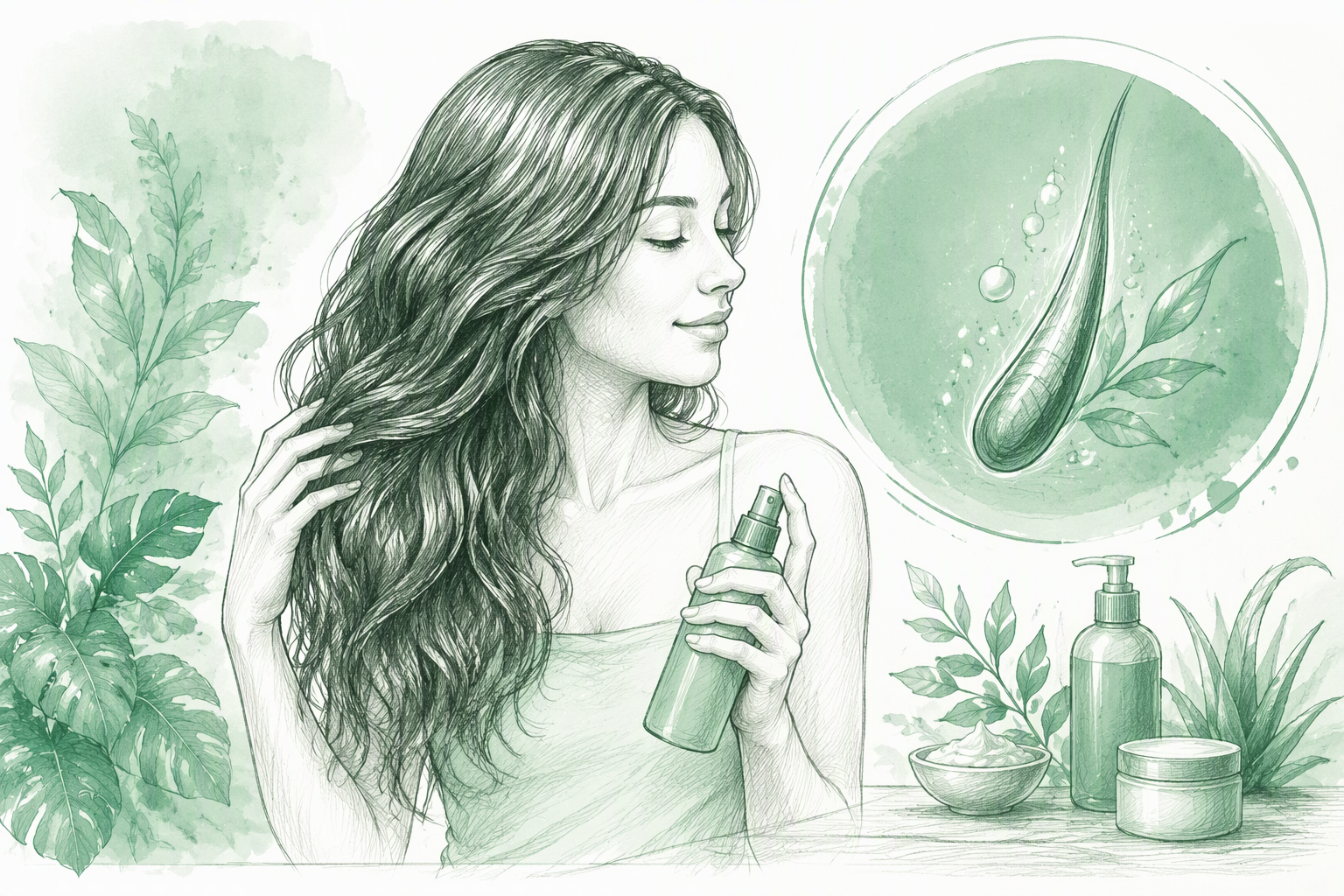
A leave-in treatment is designed to remain on the hair or scalp rather than being rinsed away. The category includes detangling sprays, conditioning creams, repair products, and scalp serums.
These products do not all deliver the same result. Softness, shine, slip, and frizz control are cosmetic effects on the hair fiber. Reducing friction may also help limit breakage. Claims about follicle activity or hair growth require more relevant evidence than a standard conditioner claim.
Hair growth and less breakage are not the same claim
Conditioning products work mainly on the visible hair fiber. By improving slip, they can make combing easier and reduce the stress placed on tangled or damaged strands.
Less breakage can help hair retain length and make thin-looking ends appear fuller. It does not show that a product has changed the growth cycle or created new follicles.
For scalp-directed products, we look beyond ingredient trends and consider the finished formula, intended use, and supporting evidence. Our guide to choosing a hair growth serum based on evidence, not hype explains that process.
How quickly should a leave-in treatment work?
Detangling, softness, and frizz control may be noticeable after the first use. Breakage and length retention need to be judged over repeated wash and styling cycles.
Be cautious when a product promises rapid growth. An immediate fuller appearance is more likely to come from conditioning, coating, or added volume than a biological change at the follicle.
Leave-In Treatment vs Leave-In Conditioner vs Scalp Serum
Product names are inconsistent, so we recommend checking the directions and intended application area.
- Leave-in conditioner: Supports softness, detangling, shine, and frizz control.
- Repair treatment: Conditions or temporarily reinforces fibers affected by heat, color, bleach, or mechanical stress.
- Scalp serum: Places selected ingredients directly on the scalp for a stated scalp or follicle-related purpose.
Choose by the problem you need to solve
Use a conditioning leave-in for tangles, roughness, static, or dry ends. Consider a repair-focused product when heat, chemical processing, or rough handling contributes to breakage.
If thinning is concentrated around the part, temples, or crown, a rich conditioner is unlikely to address the cause. Our framework for separating evidence from hype in hair growth products can help assess scalp-focused options.
Why rich conditioner may be counterproductive at the roots
Heavy oils, butters, and film-formers can leave some roots looking greasy or flat. Lost volume may also make sparse areas appear more visible.
That does not make rich formulas inherently bad. Placement matters. We generally recommend applying conditioners to the mid-lengths and ends unless the label specifically directs scalp use.
Ingredients That Matter for Hydration, Slip, Breakage, and Growth Claims
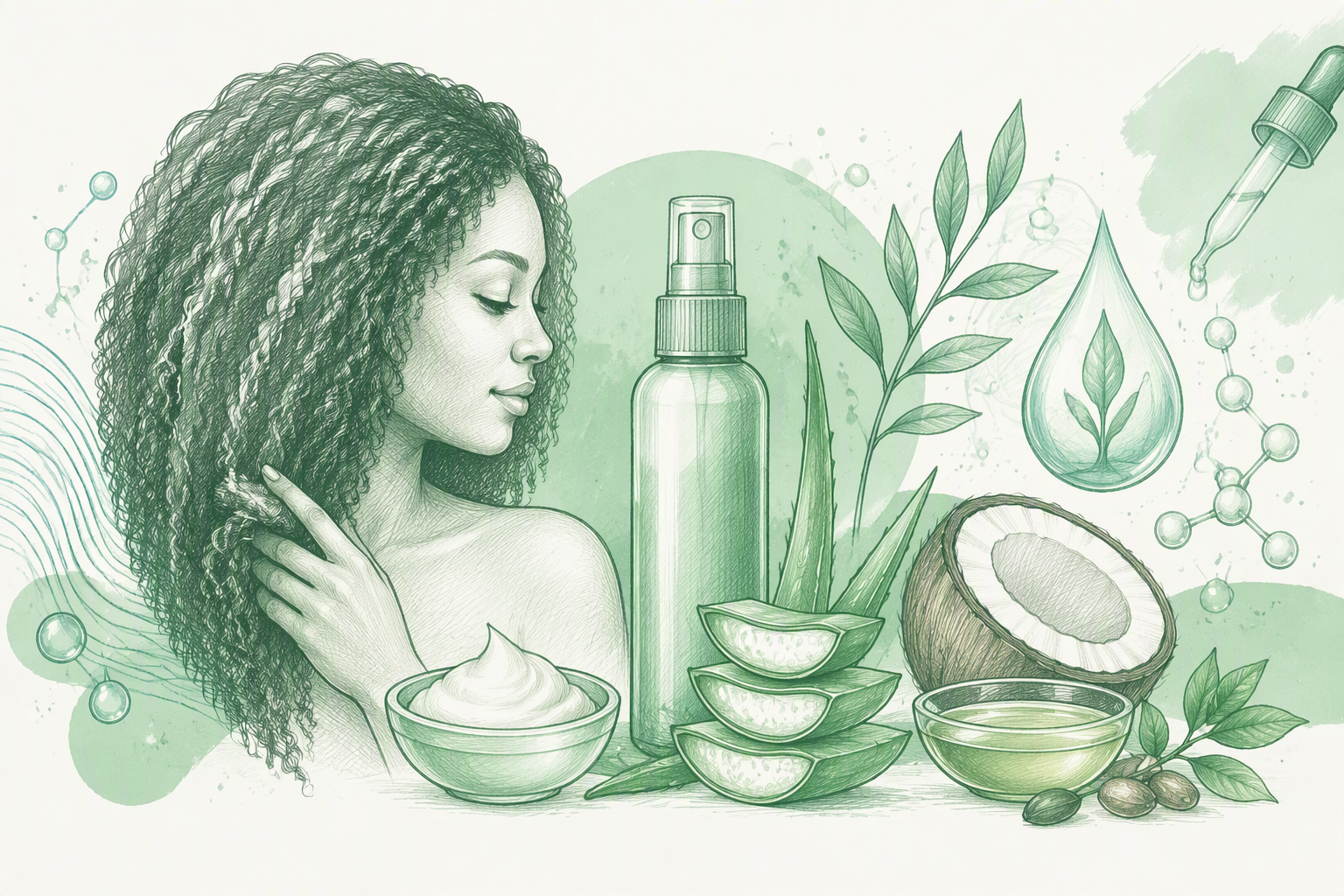
We assess ingredients by function:
- Humectants help attract or retain water.
- Emollients and fatty alcohols soften the fiber.
- Cationic conditioners improve slip and manageability.
- Proteins and amino acids may temporarily condition damaged strands.
- Silicones and other film-formers can reduce friction, add shine, and control frizz.
- Scalp actives need evidence relevant to the outcome being claimed.
Silicones are not automatically harmful to thinning hair. The practical question is whether the complete formula and recommended amount suit the hair.
Conditioning ingredients for dry, frizzy, or damaged lengths
Humectants such as glycerin can support hydration, while emollients help smooth the hair surface. Conditioning agents and suitable silicones can also reduce the force needed to detangle.
More protein is not always better. If a protein-focused treatment leaves hair stiff or rough, reduce its use and balance it with appropriate conditioning.
How to assess peptides in a leave-in formula
“Peptide-powered” is not meaningful on its own. We want to know which peptide is used, where the product should be applied, and whether evidence relates to the finished formula or only to an isolated ingredient.
Our multi-peptide serum for hair density belongs to the scalp-directed category rather than the leave-in conditioner category. As with any scalp product, it should be evaluated by its directions, formulation, tolerance, and evidence.
Why tingling does not prove growth
Tingling can result from ingredients such as menthol, fragrance, alcohol, or essential oils. It may also signal irritation. Sensation does not prove that a product is stimulating follicles.
Stop using a treatment if it causes persistent burning, itching, redness, pain, or scaling.
How to Apply a Leave-In Hair Treatment to Wet or Dry Hair
Leave-in conditioners are generally used after washing and before styling. Many distribute well through towel-dried hair, although the label should always guide use.
Start with a small amount. Too much product can flatten the roots, leave residue, and make it harder to judge the formula.
Applying a treatment to mid-lengths and ends
Remove excess water gently rather than rubbing the hair with a towel. Apply the product first to the driest ends, then work it through the mid-lengths.
Use fingers or a wide-tooth comb to distribute it without aggressive pulling. Keep rich treatments away from the scalp unless they are intended for that area.
Applying a scalp-directed leave-in
Part the hair so the product reaches the scalp instead of coating the strands. Apply the labeled amount to dry or towel-dried hair, depending on the directions.
Spread it gently and wash your hands afterward. Using more than directed does not guarantee better or faster results.
How often and how much to use
Frequency depends on the formula, hair density, wash schedule, and manufacturer’s instructions. A post-wash conditioning cream and a scalp serum may require completely different routines.
Reduce the amount or frequency if roots become flat, strands feel coated, or the scalp becomes uncomfortable.
Choosing the Best Leave-In Treatment for Your Hair Type
There is no universal best leave in hair treatment. We recommend choosing by concern first, then adjusting the product weight and amount for the hair’s texture, density, and condition.
Fine or thinning hair
Fine hair often benefits from lightweight sprays or fluids applied with precision. Heavy formulas may reduce volume, particularly when used near the roots.
A coating can make individual fibers feel thicker, but that is not the same as hair growth. Use conditioner for the lengths and assess scalp products separately.
Curly, wavy, dry, or frizzy hair
Curly or dry hair may need more lubrication and careful section-by-section application. Begin with a small quantity on damp hair and add more only where needed.
Wavy or easily weighed-down hair may suit a lighter spray. Density, dryness, and response to the formula matter as much as curl pattern.
Damaged or color-treated hair
Prioritize gentle detangling and lower friction. If heat styling is part of the routine, use a product specifically labeled for heat protection rather than assuming every leave-in provides it.
“Repair” usually refers to temporary reinforcement or surface conditioning. A cosmetic product cannot return a weathered fiber to its original undamaged state.
Disadvantages and Side Effects of Leave-In Products
Potential disadvantages include buildup, greasy roots, reduced volume, residue, and irritation. These problems often come from excessive use, poor placement, or a formula that is too heavy.
Natural ingredients are not automatically gentler. Fragrance and essential oils can irritate sensitive scalps.
Signs of buildup or an overly heavy formula
Flat roots, dullness, persistent coating, faster-returning grease, or limp curls may suggest buildup. Try using less, applying only to dry areas, or adjusting the cleansing routine.
If the problem keeps returning, the formula may not suit the hair.
Irritation and scalp sensitivity
Patch testing may reveal an immediate reaction, but it cannot guarantee future tolerance. Avoid applying cosmetic products to an inflamed or broken scalp unless a qualified professional recommends them.
Stop use if persistent itching, burning, redness, pain, or scaling develops.
Can hair get too much protein?
Stiffness and dryness are sometimes blamed on “protein overload,” but several factors can produce the same result, including product buildup, chemical damage, and inadequate conditioning.
If hair becomes unusually rigid or rough, pause the suspected treatment and simplify the routine before reintroducing products individually.
Can a Leave-In Treatment Stop Hair Loss or Work With Minoxidil?
Ordinary leave-in conditioner does not treat medical causes of hair loss. It may reduce breakage, but it cannot address every hormonal, nutritional, inflammatory, medication-related, or illness-related cause.
Broken fragments usually point toward fiber damage, while hairs shed from the root reflect a different process. Professional assessment may be needed to determine what is happening.
Using leave-in products with minoxidil or other scalp treatments
Use minoxidil or another medically directed treatment exactly as instructed. Do not mix it with a cosmetic leave-in or combine products in your hand unless compatibility has been confirmed.
Keep ordinary conditioner on the lengths when possible. Ask a pharmacist, dermatologist, or the product manufacturer about uncertain combinations, especially if irritation develops.
When a peptide claim is credible
A useful claim names the peptide, explains where the product should be applied, provides clear safety information, and supports the stated outcome with relevant evidence.
Laboratory findings may justify further research, but they do not guarantee visible results in people. Testimonials describe individual experiences; they do not establish cause and effect.
Common Questions About Leave-In Hair Treatments
The right product is not necessarily the richest formula or the one with the longest ingredient list. We look for a suitable match between the concern, application area, hair characteristics, and user tolerance.
What is the best hair conditioner?
For dry lengths, choose a conditioner that provides slip and softness without unwanted weight. For thinning, assess scalp care separately because conditioning and follicle support are different goals.
Are homemade leave-in treatments suitable for curly hair?
A homemade mixture may soften curly hair temporarily, but it can be difficult to control concentration, stability, and cleanliness. Water-based mixtures can also spoil without an appropriate preservation system.
We would not treat a homemade conditioner as an evidence-based hair-growth product.
When should thinning be evaluated by a dermatologist?
Seek professional advice for sudden shedding, rapidly progressing thinning, patchy loss, scalp pain, marked redness, or scaling. Persistent or worrying changes also deserve assessment.
FAQ
What is the main disadvantage of leave-in conditioner?
Possible drawbacks include buildup, flat roots, excess grease, irritation, and residue. Using less product or limiting it to the lengths often helps.
Do I apply leave-in conditioner to wet or dry hair?
Most leave-in conditioners are applied to damp, towel-dried hair after washing. Some allow dry-hair touch-ups, so follow the label.
Does leave-in conditioner stop hair loss?
No. It may reduce tangles and breakage, but it does not treat common causes of hair loss or create new follicles.
Can leave-in conditioner be used every day?
It can be used daily if the directions allow it and the hair and scalp tolerate it. Reduce use if the hair feels coated or the scalp becomes irritated.
Should leave-in conditioner go on the scalp?
Usually not. Apply standard leave-in conditioner to the mid-lengths and ends unless the product is specifically designed for scalp use.
Choose Evidence, Not a Growth Claim on a Bottle
Identify the target first: dry lengths, breakage, scalp discomfort, or progressive thinning. Then choose a formula made for that area, with clear directions and realistic claims.
Explore rootsbyga.shop’s hair care and scalp treatments to build an evidence-focused routine without relying on marketing shortcuts.


