
Posted by rootsbyga.shop
on October 14, 2026

TL;DR
The best shampoo for thinning hair should clean the scalp, rinse without heavy residue, and help protect fragile strands from breakage. It may add temporary body, but shampoo cannot correct genetic, hormonal, medical, or medication-related hair loss. We recommend judging the complete formula and its intended purpose rather than relying on one fashionable ingredient or a broad regrowth promise.
Table of Contents
- Best Shampoo for Thinning Hair: The Evidence-First Answer
- What Shampoo Can and Cannot Do for Thinning Hair
- Ingredients to Look For—and How Strong the Evidence Is
- Biotin, Rosemary, and Other Popular Claims: Evidence or Hype?
- How to Choose the Best Formula for Your Scalp and Hair
- Best Shampoo for Women, Men, Menopause, Postpartum, and Stress Shedding
- Shedding or Breakage? How to Read What You See in the Shower
- How to Wash Thinning Hair and Judge Whether a Shampoo Works
- Build an Evidence-Based Routine Beyond Shampoo
- FAQ
- Choose Evidence Over Front-Label Promises
Best Shampoo for Thinning Hair: The Evidence-First Answer
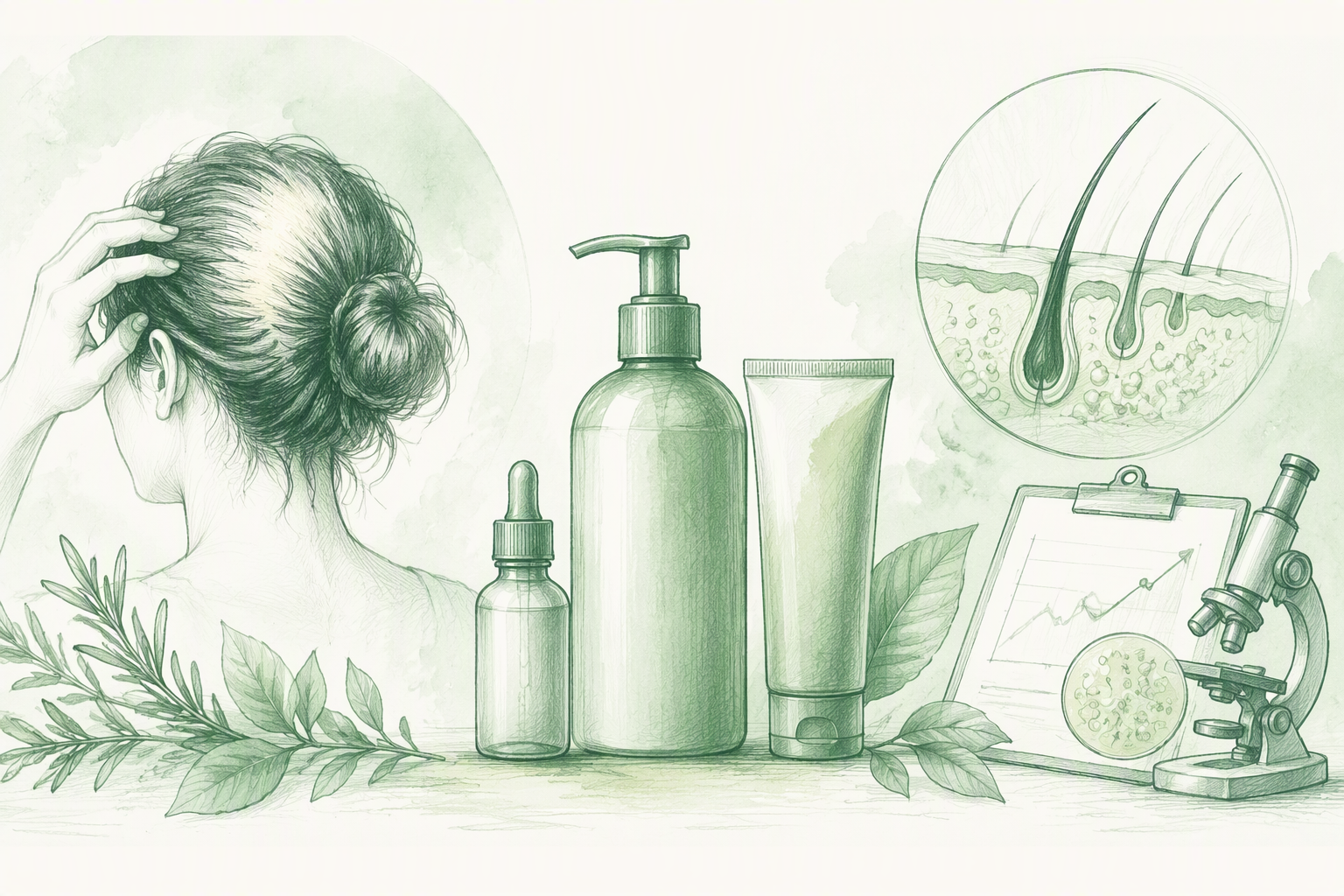
The best shampoo for thinning hair is rarely the bottle with the boldest regrowth language. We prioritize effective cleansing, scalp comfort, low residue, and breakage protection.
Different concerns require different formulas:
| Hair or scalp profile | What to prioritize |
|---|---|
| Oily or buildup-prone | Effective cleansing and light conditioning |
| Dry or fragile | Gentle cleansing and better slip |
| Sensitive | A simple formula with low irritation potential |
| Flaky or itchy | A product intended for that scalp concern |
| Color-treated | Reduced friction and protection from dryness |
| Fine or flat | Lightweight conditioning and minimal residue |
Buildup, breakage, flatness, irritation, and hair loss are separate issues. For a wider framework, read our guide to separating hair-growth product evidence from hype.
Quick Picks by Scalp and Hair Need
For oily, fine hair, we favor reliable cleansing without rich residue. Dry, bleached, or heat-styled hair usually benefits from gentler washing and more conditioning support.
Persistent flakes or itching call for a shampoo designed for that condition rather than generic “growth” claims. Ongoing or worsening symptoms should be assessed by a healthcare professional.
The Six-Point Shampoo Scorecard
We evaluate shampoos by asking:
- Does the formula remove expected oil and buildup?
- Does the scalp remain comfortable?
- Does it rinse without flattening fine hair?
- Does it improve softness and manageability?
- Are its claims realistic for a rinse-off product?
- Is the finished formula supported, or only a featured ingredient?
Price, popularity, and gendered packaging do not answer those questions.
What Shampoo Can and Cannot Do for Thinning Hair
Shampoo works mainly at the scalp and hair-fiber level. It can remove oil, sweat, and product residue. A suitable formula may also improve body, reduce tangling, and help fragile hair break less.
It cannot diagnose or correct the underlying cause of hair loss. Genetics, hormones, stress, illness, and some medicines can contribute to thinning, so sudden or substantial changes deserve professional assessment.
Cosmetic Fullness Is Not Follicular Regrowth
Proteins, conditioning agents, and other film-forming ingredients can make strands feel fuller. Lightweight formulas may also help roots sit higher by avoiding heavy residue.
Those cosmetic effects can be useful, but they do not show that new hair has grown.
Why Rinse-Off Contact Time Changes the Evidence
A familiar ingredient name does not prove performance. Its concentration, stability, delivery system, contact time, and place within the full formula all matter.
Because shampoo is rinsed away, we treat strong biological claims cautiously unless the finished product has relevant support.
Ingredients to Look For—and How Strong the Evidence Is
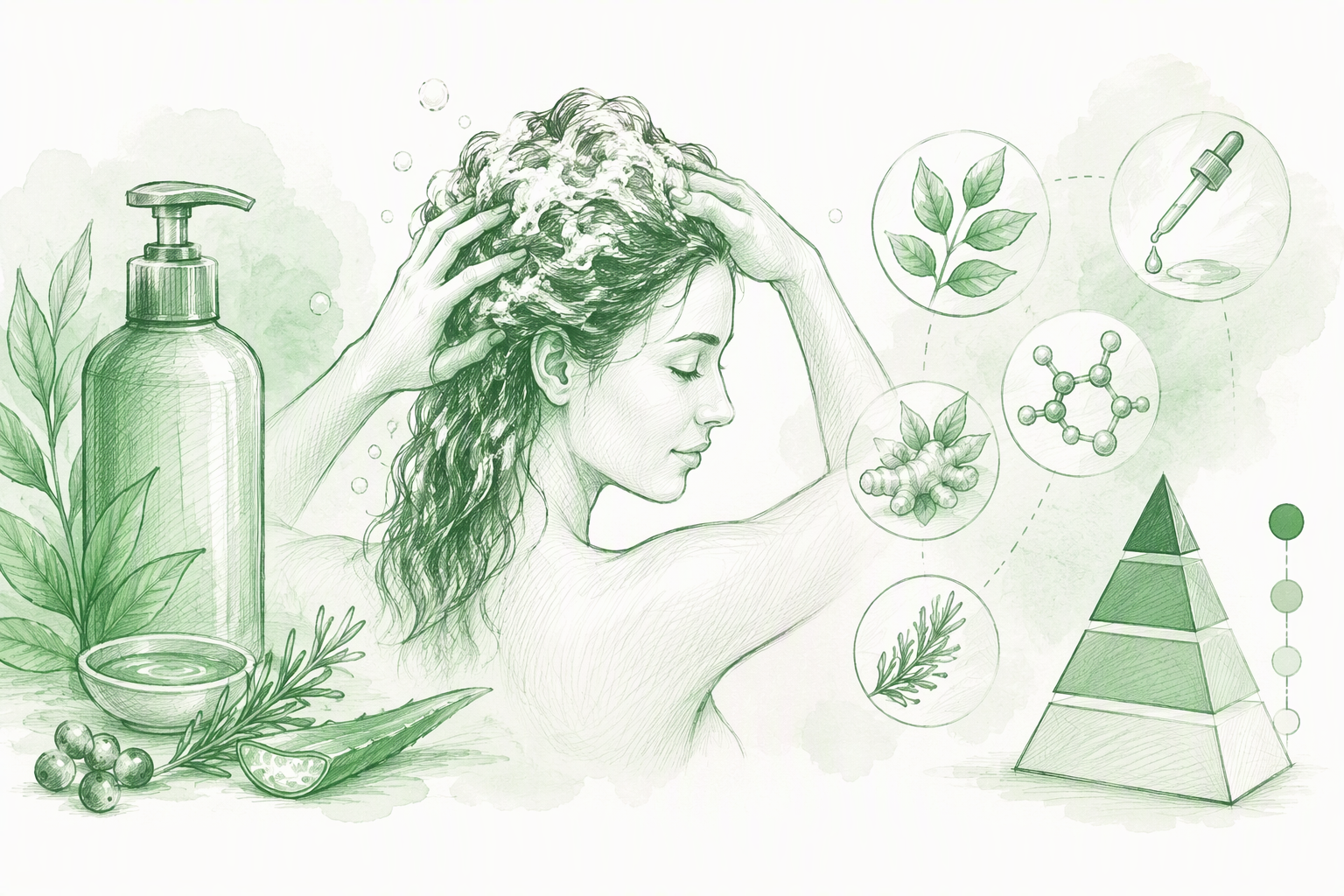
We match ingredients to a clear job rather than expecting every formula to stimulate growth.
| Ingredient type | Practical role | Main limitation |
|---|---|---|
| Proteins | Temporary body and fiber support | May feel stiff on some hair |
| Ceramides and conditioners | Slip and breakage support | Rich formulas may flatten fine hair |
| Panthenol | Moisture and improved feel | Primarily a cosmetic benefit |
| Scalp-care actives | Help address a specific scalp concern | Must match the condition |
| Peptides or caffeine | Marketed for scalp support | Value depends on the finished formula |
| Botanical extracts | Vary by ingredient and formula | May irritate sensitive scalps |
An ingredient associated with scalp care is not automatically a treatment for hair loss.
Peptides and Caffeine: Promising Names, Formula-Dependent Value
Peptides and caffeine may sound compelling on a label, but their presence alone does not establish regrowth from a shampoo. We look for a credible formula, realistic claims, and finished-product evidence.
That distinction matters when comparing a copper peptide shampoo for thinning hair with a leave-on product. The same featured ingredient can behave differently in different formats.
Ketoconazole, Salicylic Acid, and Scalp-Condition Control
Some shampoos are formulated for dandruff, flakes, or buildup. These products may improve scalp comfort when properly matched to the concern, but that is different from reversing hair loss.
Follow the product directions and seek clinical advice if symptoms persist or worsen.
Panthenol, Proteins, Polymers, and Temporary Thickness
Panthenol, proteins, and conditioning polymers may improve softness, slip, and apparent body. Better manageability can also reduce rough handling during detangling.
More is not always better. A formula that leaves hair coated, stiff, or flat is a poor match regardless of its headline ingredients.
Biotin, Rosemary, and Other Popular Claims: Evidence or Hype?
Biotin, rosemary, and other popular ingredients should be judged within the finished formula. Their presence on the label does not prove that a rinse-off product will regrow hair.
We also separate nutritional claims from topical cosmetic claims. A shampoo containing a vitamin is not equivalent to diagnosing and correcting a deficiency.
The Biotin Reality Check
Biotin is often promoted for thinning hair, but a biotin shampoo should still be evaluated for cleansing, residue, conditioning, tolerance, and product-specific support.
We do not recommend self-diagnosing a deficiency or using supplements as a substitute for appropriate medical advice.
Natural Does Not Mean Irritation-Free
Botanical extracts, essential oils, and fragrances can irritate some scalps. “Natural” therefore tells us little about effectiveness or tolerance.
We compare formulas by performance, evidence, and scalp compatibility—not by marketing category.
How to Choose the Best Formula for Your Scalp and Hair
Start with four questions:
- Is the scalp oily, dry, flaky, sensitive, or balanced?
- Is the hair bleached, heat-damaged, tangled, or breaking?
- Is product buildup contributing to flatness?
- Is the goal comfort, volume, breakage reduction, or regrowth?
A sulfate-free label can be useful, but it does not describe the entire formula. The full cleansing system and the hair’s response matter.
Oily, Flaky, or Buildup-Prone Scalp
Choose dependable cleansing with lightweight conditioning. Rich products can weigh down some fine hair and make the scalp look more visible.
Recurring flakes or itching may require a targeted scalp shampoo rather than a general volumizing formula.
Dry, Sensitive, or Color-Treated Scalp and Hair
We favor gentle cleansing and enough conditioning to reduce friction. Lower-fragrance options may suit people who find heavily scented products uncomfortable.
Avoiding shampoo altogether is not necessarily gentler, especially when oil and styling residue accumulate.
Fine Hair That Looks Flat After Washing
Look for clean rinsing and light conditioning. Fine hair still needs protection, but heavy deposition can work against volume.
Visible lift after washing is a styling benefit, not proof of reduced shedding or regrowth.
Best Shampoo for Women, Men, Menopause, Postpartum, and Stress Shedding
Scalp condition and hair-fiber needs are more informative than gendered packaging. People can experience patterned thinning, stress-related shedding, breakage, or several concerns at once.
Shampoo can improve cleansing and appearance. It cannot correct every hormonal, genetic, nutritional, or medical contributor.
Women and Menopause-Related Thinning
Hair and scalp needs may change around menopause, but a menopause label does not guarantee a better formula. We recommend choosing according to dryness, sensitivity, residue, and breakage.
Persistent thinning or a widening part warrants professional assessment.
Men and Patterned Thinning
Temporary thickening can make fine hair look fuller, but it does not address the cause of patterned loss. Men should choose by scalp profile and formula performance rather than masculine packaging or fragrance.
Postpartum and Stress-Related Shedding
Postpartum changes and stress may be associated with shedding. A gentle shampoo can support scalp comfort and reduce avoidable breakage, but it cannot remove the underlying trigger.
Sudden, severe, or prolonged shedding should be discussed with a healthcare professional.
Shedding or Breakage? How to Read What You See in the Shower
Full-length strands may indicate shedding, while short, uneven, or frayed pieces suggest breakage. These clues are not a home diagnosis, but they can guide the next step.
Hair also accumulates between wash days, so seeing more strands after a longer interval does not prove that the shampoo caused the loss.
Signs That Suggest Shedding From the Root
Look for full-length hairs alongside a visible change in density, part width, or hairline. A sudden or continuing increase deserves clinical attention.
Signs That Suggest Shaft Breakage
Short pieces, split ends, roughness, and damage near processed areas point toward breakage. Gentler detangling, heat protection, conditioning, and a wide-tooth comb may help limit additional damage.
How to Wash Thinning Hair and Judge Whether a Shampoo Works
Wash according to scalp oil, buildup, styling habits, and any clinician directions. There is no single schedule that suits everyone.
Apply shampoo mainly to the scalp, rinse thoroughly, and handle wet lengths gently.
A Realistic Shampoo Trial Timeline
From the first washes, assess cleansing, residue, softness, detangling, comfort, and cosmetic volume. To monitor longer-term changes, keep styling habits reasonably consistent and use photographs taken under similar conditions.
When to Stop or Switch
Stop using a product if it causes persistent burning, redness, swelling, marked itching, or worsening dryness. Switch formulas if it repeatedly leaves residue or fails to meet the scalp’s cleansing needs.
Build an Evidence-Based Routine Beyond Shampoo
Shampoo is one part of a thinning-hair routine. Leave-on products remain on the scalp longer, but they still need credible formulation, tolerability, and evidence.
Our review of whether copper peptides can regrow hair explains why scientific rationale and demonstrated results are not the same thing.
Where a Peptide Leave-On Fits
A leave-on may complement appropriate cleansing, but “contains peptides” is not enough. We consider the vehicle, instructions, tolerance, transparency, and support for the finished product.
When Shampoo Shopping Should Become a Medical Conversation
Seek professional assessment for hair loss that is sudden, rapidly worsening, patchy, painful, inflamed, or accompanied by other unexplained symptoms. Persistent widening, recession, or shedding also deserves attention.
Final Buying Checklist
Choose a shampoo that:
- Matches the scalp and hair condition
- Cleans without persistent irritation
- Provides enough conditioning without heavy residue
- Distinguishes temporary volume from regrowth
- Makes claims appropriate for a rinse-off formula
FAQ
What Type of Shampoo Is Good for Thinning Hair?
We recommend a scalp-compatible shampoo that cleans effectively, rinses well, and does not worsen dryness or breakage. The best formula depends on oil, sensitivity, flakes, damage, and hair texture.
How Does Stress Affect Hair Thinning?
Stress can contribute to hair changes, but shampoo cannot address the underlying trigger. A clinician can help assess significant or persistent shedding.
Does Biotin Help With Hair Thinning?
A biotin label does not establish that a shampoo will regrow hair. We judge biotin shampoos by the same standards as other formulas: cleansing, conditioning, tolerance, residue, and finished-product support.
What Ingredients Help Hair Look Thicker?
Proteins, panthenol, conditioning agents, and film-forming ingredients may add temporary body or reduce breakage. These cosmetic benefits should not be confused with creating new follicles.
Does Hair-Growth Shampoo Actually Work?
It depends on the claim. Shampoo can clean the scalp, improve appearance, support fragile fibers, and help manage some scalp conditions. Strong regrowth claims require stronger evidence than temporary fullness.
Choose Evidence Over Front-Label Promises
Build the routine around scalp compatibility, gentle fiber care, and realistic claims. Explore our conditioning peptide shampoo for an evidence-conscious cleansing step designed for a broader thinning-hair routine.


